Showing posts with label review. Show all posts

Thursday, 20 October 2016

First Hands on with the Google Pixel XL

Google Pixel XL 32GB White
The Google Pixels are finally out in Australia. Luckily I got to experience this device before its debut and it has been incredible. I have the Google Pixel XL 32GB in white and I can not find anything about this that I really don't like.

At first that huge chunk of glass at the back was a bit bizarre but now that I have had the device for a while its grown on me and adds a premium feel to the device. The main feature we all spend most of our time looking at is the display and holy smokes it is incredible! I personally went into developer options and turned sRGB on to soften those popping colours. Comparing this display to my Galaxy S7 Edge and iPhone 7 Plus, it wins hands down.

The software experience on this has been a dream I have yet to come across any hiccups. The Pixels layout and fancy wallpapers which ever so slowly move as you unlock your device is just dreamy. When jumping from app to app and playing around on all the new features not once did I see any apps crash or stutter.

Navigating was very simple considering it does not differ much from most other android devices. Having the fingerprint sensor on the back of the device is one of the best positions and something Apple should take note of. There is one gesture you will have to enable straight out of the box which is to allow the finger print sensor to pull down the notification panel. I loved that feature which was on my Huawei P9 and make the device easy to use with out touching the screen.

The camera on the Pixel really does take some stunning pictures. I have a few images below showing of the camera in low light from the Pixel. Coming from some of the best cameras on a smartphone this really does take the cake. Each image is crisp and all were taken on auto with no touching up in post. I will do a comparison shortly with the iPhone 7 Plus and the Galaxy S7 Edge.

In conclusion the Google Pixel is an incredible device and really does out shine the competition with is unique design and polished software experience. if you are in the market to get a new device I would highly recommend.  

Google Pixel XL vs iPhone 7 Plus Back
Google Pixel XL vs iPhone 7 Plus Front


Pixel XL Laneway
Pixel XL Bourke St Melbourne
Pixel XL Bourke and William 


Tuesday, 11 October 2016

iPhone 7 Plus Review


The iPhone 7 plus is Apple’s main flagship of 2016. The device itself looks very similar to the iPhone 6/S except for a few changes with the antenna bands and, of course, the second camera and the ‘revolutionary’ Jet Black. I personally went for the Matte Black 256GB as I didn’t want to deal with scratches associated with the Jet black model.  After experiencing some hiccups (hissing noise) from day one which still has not been resolved, I have managed to work around that annoying noise that prohibits me from using the Video/Voice recorder until Apple finally replaces my device. So unfortunately I will not have any video comparisons yet. I won’t be focusing on the design as it is played out and to be honest boring.


Battery


The main features to me are usability and network. I am a heavy user and need my devices to be up and running all day. For some time now I have been carrying around an extra battery pack to keep me topped up. With the 7 Plus’s 2900mAh battery, optimisation of iOS 10 and the in house Apple A10 processor, I am getting around 1.5 days worth of usage which is incredible. My usage patterns involve playing games (Hearthstone and Pokemon GO), social media, calls and camera. On the odd day I would even see 2 full days of usage.  My usage roughly starts from 8am in the morning and I have been ending the day on 40-50% battery. This means I do not have to charge it overnight; in the mornings I would only be seeing around 1-2% of battery drain whilst I am sleeping. For me this is absolutely perfect on battery life; this is what I have come to expect from flagship devices. Apple has hit the nail on the head with the iPhone 7 Plus battery life.

Performance


Handling the everyday task was smooth and fluid, this being incredibly noticeable since I am a heavy Android user constantly facing poor optimisation of applications. After diving in to the Apple eco-system it is easy to see why they are so popular. Simplicity is everything in iOS, the way that things just work shows how much control Apple has over its operating system. One of the first things you notice is how fast applications open and load up. RAM management is on point and multitasking through all your open applications is painless and smooth. I find myself jumping back and forth between multiple applications with no sign of lag or stuttering. The new Taptic (haptic) home ‘button’ actually didn’t take as long as I thought to get used to- after about a day I didn’t even notice the difference between the physical button and the new sensor.

Call quality on the other hand, I was expecting to be very clear and crisp, in comparison to the Samsung Galaxy Note 7. I found that the iPhone was lacking a bit in quality as I was constantly having to check the volume of the device to hear who I was speaking to. I obviously went through testing of the two devices on the same carrier and turning VoLTE on/off. One of the interesting things I have been testing out is the speeds I am getting on Telstra’s 4GX network; these results have been amazing. The speeds on average I was getting on the iPhone 7 Plus were Download: 140Mbps Upload: 40Mbps Ping: 20ms. These speeds are insane and definitely help with everyday use.


Camera


The camera for me has been a pleasure to work with. I managed to get out and take some quick comparison photos between the Galaxy Note 7 and iPhone 7 Plus. I will be doing a full comparison after I capture some low light shots. Below are a few images to take a look at and make your mind up about: 

iPhone 7 Plus Cactus

iPhone 7 Plus Reflection

iPhone 7 Plus Vibrant

iPhone 7 Plus Blue Skies


Monday, 8 December 2014

RDT's Hands on Moto 360!!!


Check out my quick hands on and unboxing of the Moto 360 Smart watch by Motorola, I must say I was impressed by its appearance and feel in the hand. Even wearing this watch feels great. I do think Android Wear needs some time to mature.

If you want to contact RDT please feel free to call between the hours of 9am-8pm AEST. deon@robertsondt.com Ph: 0426279566 or visit https://www.facebook.com/rdtaus

Thursday, 20 November 2014

RDT's Review on Techwraps Australia!! Best Skins for you Devices!!!


Have you ever wanted to give your phone a new splash of colour or wood grain? Then Techwraps is the one for you. I stumbled across this the other day when I was getting sick of my Nexus 5. Surprisingly Techwraps have it all and in the most amazing colours and variations.

Techwraps has a huge range from Phones, Consoles, smart watches to MacBooks with so much more. You will definitely have to head over to Techwraps and see the range!!! 

http://www.techwraps.com.au

Stay tuned for a full review on RDTs Youtube channel. 


If you want to contact RDT please feel free to call between the hours of 9am-8pm AEST. deon@robertsondt.com Ph: 0426279566 or visit https://www.facebook.com/rdtaus

Tuesday, 18 November 2014

Be Quiet! Offers Silent Base 800 High-end PC Chassis

Be quiet! introduces its first chassis - the Silent Base 800. This case offers generous space and is firmly aimed at the premium segment - for customers who want high end features in a low noise systems. With its innovative design, be quiet! guarantees silent operation while delivering excellent cooling performance. 
True to the motto 'Form Follows Function', each component in the Silent Base 800 fulfils a specific purpose in order to increase user-friendliness and bring performance to a new level.
As usual, be quiet! puts strong emphasis on maintaining low noise level for its Silent Base800, without any reduction in performance. To achieve this goal, be quiet! has developed innovative front, top and bottom panels that provide intelligent airflow. Fresh air is deliberately drawn into the casing and transported through the interior, increasing cooling capacity compared to conventional solutions. At the same the panels prevent the sound waves from exiting the chassis.
To minimise the noise level even further, be quiet! has covered the side panels and front cover of the Silent Base 800 with a brand new anechoic material. In addition, three award winning Pure Wings 2 fans have been installed, decoupled from the housing. Two of them are 140 millimeter format and have been factory installed in the front panel, another pure Wings 2 fan with a 120 millimeter diameter has been placed in the rear. This configuration already provides optimal airflow, but that can be increased further with the installation of up to four additional fans and by opening the 3-in-1 air intakes in the side panels.

Optimum space and tool-free installation
The Silent Base 800 offers more than enough space for high-end systems and associated top-class components. Motherboards in ATX, Micro-ATX or Mini-ITX format, heavy-duty tower coolers with a height up to 17 centimeters and long graphics cards can be installed. For 3D accelerators, up to 40 centimeters of free space is available if you remove one of the pair of modular HDD cages is removed. The Silent Base 800 can also be equipped with up to three 5.25" drives, seven 3.5" and four 2.5" drives. The functional structure of the new be quiet! case allows users to install all components without tools. Silicone inserts decouple the hard drives and power supply from the case. There is also the possibility of installing water-cooling with several radiators in the 120- to 280-millimeter range.

Stability and optimal dust protection
Weighing in at a significant 9 kilograms, it's clear just how substantial the build quality of this be quiet! chassis is. Measuring a solid 495mm x 266mm x 559mm, the housing has been constructed to an industrial standard. Be quiet! achieves this by using thick steel and high-quality ABS plastic. The manufacturer is demonstrating a new and innovative feature in the side panels: the edges are bent in a U-shape and, together with the newly developed insulation material, form an extremely rugged construction. These factors show that besides a fully functional structure and excellent cooling performance, be quiet! also gave serious focus to the build quality of the Silent Base 800. This is underlined by the numerous dust filters, which are factory-installed on all air intakes.

The Silent Base 800 will be available from November 24th in black/orange, completely black as well as black/silver color combinations at a price of 139,90 USD (excluding VAT) or 119 Euro (including VAT). For the UK the MSRP is 99 GBP (including VAT).


If you want to contact RDT please feel free to call between the hours of 9am-8pm AEST. deon@robertsondt.com Ph: 0426279566 or visit https://www.facebook.com/rdtaus

Wednesday, 15 October 2014

Boarderland's The Pre-Sequel Now Available!!!!!

 The New Borderlands is now Available on Steam!! I have only had the chance too boot up into it but more details will be on its way. Definitely a game that is staying true to the player, I for one love the style of this game and I can not get enough of it.

I will be testing this game on 3-Way GTX 780's and GTX 980 SLI. Thanks for reading and stay tuned for more.


If you want to contact RDT please feel free to call between the hours of 9am-8pm AEST. deon@robertsondt.com Ph: 0426279566 or visit https://www.facebook.com/rdtaus

Saturday, 4 October 2014

Aerocool Xpreadtor Australia

Aerocool Xpredator Cube is made to be displayed on top of the desk or to be carried to a LAN party, thanks to its fancy appearance and the smaller dimensions of 280 x 418 x 412 mm. The integrated window in the side-panel offers insights on the built-in components. No compromise has to be made when choosing the hardware for the system configuration due to the spacious interior design and the support of both Mini-ITX and Micro-ATX motherboards.
Special effort has been made to allow much easier and convenient mounting process of the system components. Users can simply remove the mainboard-tray when installing the main components, such as mainboard, memory, CPU and CPU cooler. Conventional air-cooling solutions with a height of 187 mm and water-cooling solutions with dual radiators are supported by the Xpredator Cube. VGA cards with a total length of 320 mm can be installed in standard configuration. With the front fan removed, even larger VGA cards with 345-millimeter length are supported.

Mounting process of optical drives, hard drives and solid state disks is simple as well, since both the ODD and the HDD racks can be removed completely. The HDD rack supports tool-free mounting of three 3,5 inch or 2,5 inch drives. Additional two 2,5 inch drives can be installed in the ODD rack under the 5,25 inch bay. In order to support power supply units without length limitations, PSU location has been changed so that the PSU fan faces towards the side-panel. This layout gives more room for cable routing and offers additional cooling possibilities. Up to six fans can be mounted inside the chassis, where two fans are already installed, offering smooth airflow out of the box. One big 200 mm case fan is located in the front, spinning quietly at 800 rpm (53,4 CFM, 26,5 dBA). Another 140 mm model with 1.200 rpm (59,48 CFM, 27,6 dBA) on the rear side hauls out the air. Shell-like vent structure design in the top cover allows users to customize the airflow exhaust furthermore.

The Xpredator Cube chassis feature even more useful functions, such as pre-drilled holes for cable management and water-cooling tubes, a magnetic and removable PSU dust filter, shock-proof rubber pads for 3,5 hard drives and the power supply unit. Last but not least is the well-equipped I/O panel in the top-panel, which offers two USB 3.0 ports, one headphone jack, one Mic jack and an integrated fan controller for fans with up to 15 watts consumption. All Xpredator Cubes are made of especially robust steel with 0,7 millimeter thickness, which are additionally reinforced by utilizing Aerocool's unique side bar design.
All four Aerocool XPredator Cube models are available at etailers and retails starting this week. Suggested manufacturers price is set at $132.00 AU.


Source: http://www.guru3d.com/news-story/aerocool-xpredator-cube-pc-chassis.html
If you want to contact RDT please feel free to call between the hours of 9am-8pm AEST. deon@robertsondt.com Ph: 0426279566 or visit https://www.facebook.com/rdtaus

Wednesday, 1 October 2014

GeForce GTX 980 2 and 3-way SLI review

GeForce GTX 980 2 and 3-way SLI

Last week we had a peek at the GTX 970 setup in SLI, this round however we bring in the big guns. We will arm our big daddy PC rig with two and even three GeForce GTX 980 cards, yep we'll zoom in an up-to 3-way SLI performance for the GeForce GTX 980. In this review we'll run the standard benchmarks, but we will also have a good look at Ultra HD gaming performance as well as a micro stuttering analysis with the help of FCAT. Next to that we'll not only overclock the 2-way setup, but also overclock the 3-way SLI setup to see how overclocking and tweaking goes with that many graphics cards.
Obviously we'll throw in some 970 SLI results as well as for the money, nobody will deny that, it is the cheaper alternative. We will be looking at performance from a single monitor point of view, so ideally with so much horsepower a WQHD resolution (2560x1440/1600) is the monitor resolution where you should start (but preferably Ultra HD of course). You will notice great performance increases with 2-way SLI as the cards scale nicely with so much horsepower, 3-way SLI will have a bit more scaling issues. Yeah, while Full HD (1920x1080/1200) and WHQL (2560x1440) have become the industry standard within the display industry, enthusiasts will never settle for just the 'standard' and are always looking for the next big innovation in technology. Ultra HD gaming is exactly that, the next evolution in immersion that gamers have been waiting for. Commonly addressed as Ultra HD, UHD or 4K, this new resolution refers to the ultra-high resolutions with approximately 4000 horizontal pixels. Ultra HD resolution also has four times the number of pixels of a typical 1920x1080 resolution. It will be interesting to find out how the GeForce GTX 980 cards will handle such extreme resolutions. Considering its nice 4 GB framebuffer but slightly dimmed memory bandwidth yet hefty GPU clocks, it's looking quite alright I'd say! With UHD (Ultra High Definition Gaming) becoming rapidly popular we'll test multiple multi-GPU setups on such a monitor. Next to that we'll perform FCAT tests to see where AMD is in Autumn anno 2014 in terms of micro-stuttering and frame pacing.
Join us in this review where we'll once again look at everything. As if you figured just one card would be interesting, you have no idea what's coming at you with two and later on in the article, even three cards setup in SLI.
 

Continue reading: http://www.guru3d.com/articles-pages/geforce-gtx-980-sli-review,1.html


If you want to contact RDT please feel free to call between the hours of 9am-8pm AEST. deon@robertsondt.com Ph: 0426279566 or visit https://www.facebook.com/rdtaus

Wednesday, 17 September 2014

RDT's Unboxing of the ASUS Z97 Deluxe NFC & WLC


Be sure to check out my latest video on YouTube, let me know if you would like to see more and what sort of content you are wanting?


If you want to contact RDT please feel free to call between the hours of 9am-8pm AEST. deon@robertsondt.com Ph: 0426279566 or visit https://www.facebook.com/rdtaus

Sunday, 7 September 2014

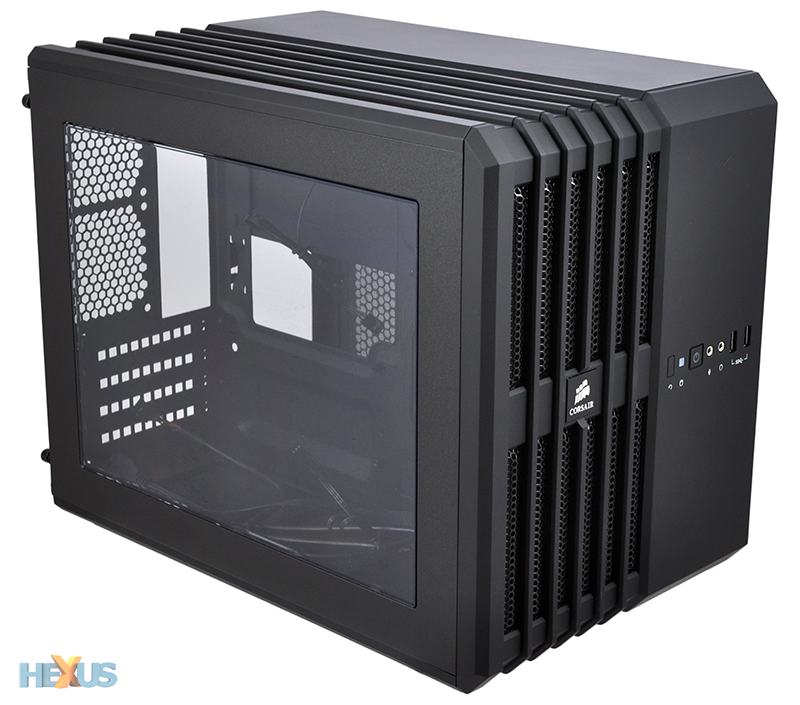
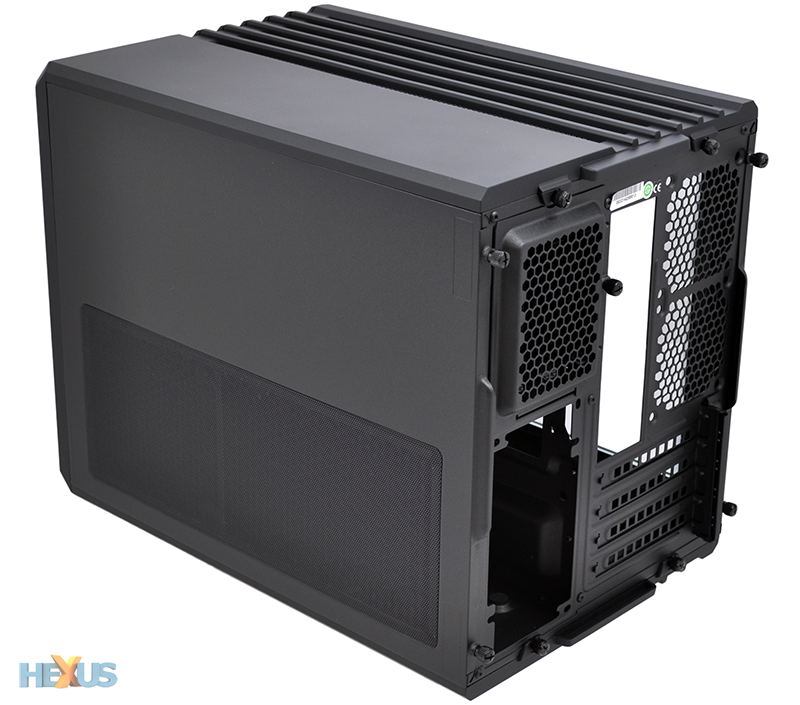
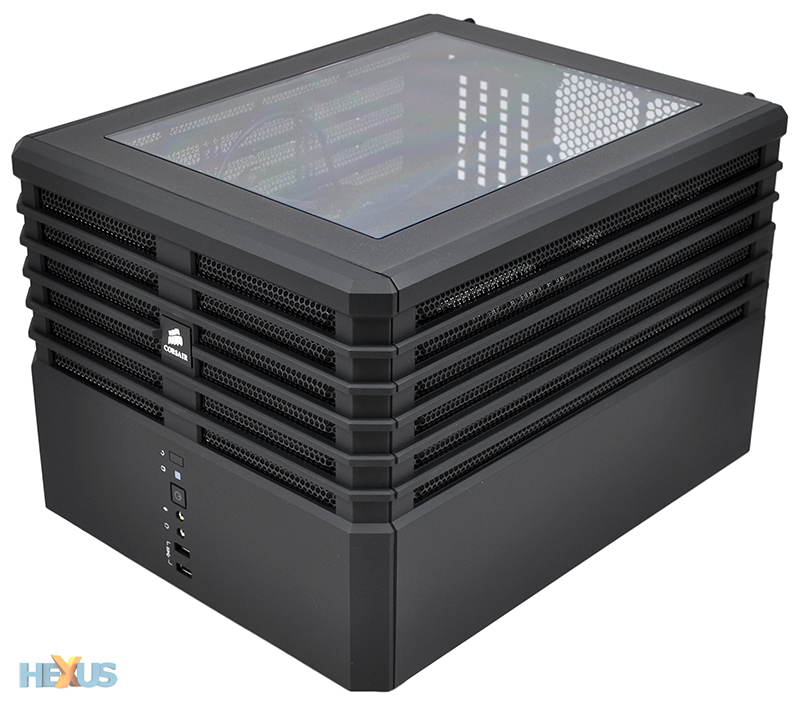
Corsair Carbide Air 240 Review

 Yesterday we picked up a Corsair Carbide Air 240 and from first impressions this case is dam sweet, nice and small and a  good coat of paint. The size of this case is a real buying point for me especially that it can support ITX and mATX with plenty of room for cable management.

 After taking the cloths off this case I got to the guts of it which is awesome it took little to no effort to take all the panels off.

One of my favourite things about this case is its dual chamber design, much alike the big brother to this case the Corsair Carbide 540 and the Fractal Design Node 804.

If you are looking at this case for a watercooling loop I would not suggest it unless you plan on modding it. You can fit two 240mm radiators if you use a ITX.


Build quality shocked me on this case, when I pick up a Corsair case I expect it to be perfect. Upon inspecting the case I noticed the side panel doesn't fit flush with the case. Kind of a small fault but drives me crazy.

If you are looking at this case don't expect to fit too much in there. It is perfect for a small form factor case and I look forward to doing a build in it.


If you want to contact RDT please feel free to call between the hours of 9am-8pm AEST. deon@robertsondt.com Ph: 0426279566 or visit https://www.facebook.com/rdtaus

Wednesday, 3 September 2014

An In Depth Analysis Of The Samsung Galaxy Note 4 – And How It Dwarfs The iPhone 5S

With Samsung having launched the Galaxy Note 4, the immediate question on all of our minds is that how well does the device stack against all the current flagship devices out there. With a 2.5 GHz Snapdragon 805 or the 1.3GHz Octa Core Exynoss 5433, the Note 4 is all set to dominate any and all current flagships out there.
However, we won’t be satisfied, and neither should you be without an in depth look at how the Galaxy Note 4 stands in comparison to other device. For the purpose of this review, we have chosen Apple’s current flagship, the iPhone 5S to see how well the two fare off against each other.
Now before you start criticizing us that the iPhone 5S is no match for Samsung’s latest beast, you should know that the purpose of this review is simply to get a better understanding of how the Galaxy Note 4 works and what improvements it makes and has over Apple’s current flagship. So hold your horses, grab some popcorn, and enjoy.
Galaxy-Note-4

Design:

With Samsung living up to it’s earlier promise of offering two metal devices this year, the Samsung Galaxy Note 4 has a full aluminum chassis. The iPhone 5S on the other hand, is a single metal body with no other materials present on the device. The Galaxy Note 4 on the other hand has a leather back which houses the battery and other components.
Coming towards the dimensions of both the flagships, the Galaxy Note 4 is obviously larger than the iPhone 5S given the different purposes and functionality intended for both the devices. The dimensions of the Galaxy Note 4 are 53.5 x 78.6 x 8.5mm, which as evident, do not facilitate single handed use. However that is one function that most users looking for the Galaxy Note 4 won’t worry about.
Coming towards the iPhone 5S, Apple’s present flagship measures 123.8 x 58.6 x 7.6 mm which is set in mind keeping the requirements of a smartphone and single handed use. As evident due to it’s larger screen size, the Galaxy Note 4 weighs more than the iPhone 5S. The weight of the Galaxy Note 4 is 176 grams compared to 112 grams on the iPhone 5S.
Sensor wise, the Galaxy Note 4 has a slew of sensor enough to satisfy any sensor loving individual’s every need. The iPhone 5S however does not stay far behind with all the usual light, gyro and motion co-processors present on the device. Both the devices also now possess a fingerprint sensor for unlocking and other purposes. Waterproofing however is one place where Samsung has the clear edge over the iPhone.
Galaxy-Note-4

Processing Power:

The Samsung Galaxy Note 4 is a processing beast. And we do not say that lightly. Either of the Snapdragon 805 or the Octa core Exynoss 5433 are processing giants and give the Note 4 clear advantage over all the other flaghsips out there when it comes to running performance intensive games and applications.
This is of course in line with Samsung’s tradition of making sure it’s devices come with top hardware and performance specs suited to any and all needs. The 4 GB RAM on the Note 4 further pushes the boundaries of mobile processing further.
How well does the iPhone 5S stack up to this? Well Apple’s 64 bit A7 processor with a maximum frequency of 1.4 GHz does sound dwarfed when compared to the 32-bit 805 or the Exynoss powerhouse the Galaxy Note 4 has in stock.
However, Apple’s strength always has been OS optimization which ensures that the existing specifications on the processor are more efficiently utilized. It still has the potential to significantly match, if not top out the Galaxy Note 4, yet of course, the latter still remains the powerhouse in this category.
Galaxy-Note-4

Display:

Samsung has always boasted about it’s Super AMOLED display in all of it’s flagship and other devices. The display specifications on the Galaxy Note 4 have enough high numbers to put anyone to shame. With a staggering pixel density of 515 ppi, the Galaxy Note 4 ensures that the display is razor sharp enough to put diamond cutters to shame.
This coupled with the 5.7 inch screen size QHD-Super Amoled display provides any Galaxy Note 4 lover enough argument points to last a lifetime. Apple’s iPhone 5S on the other hand has a consistent resolution of 326 ppi, which is aimed towards maximizing user interaction with the device.
Galaxy-Note-4

Camera(s):

When coming towards camera resolution, the Galaxy Note 4 is once again in the clear lead. With a rear camera resolution of 16 MP, optical image stabilization, and ISOCELL, the Galaxy Note 4 will ensure that you get all the high quality on your photos as you desire. ISOCELL promises better image quality in terms of more light capture, improved sharpness, wider dynamic range and overall improved image accuracy.
With a resolution half of the Note 4 when it comes to the rear camera, clearly the iPhone 5S looses this one as well. While both the devices feature 1080p video recording, the Galaxy Note 4 also has 4K video enabled. For all the selfie lovers out there, the 3.7 front camera on the Note 4 won’t disappoint you either.

Conclusion?

Well, it really should be clear by now who is the winner. But like mentioned earlier, the purpose here isn’t to dwarf the iPhone 5S, but rather to understand how the Galaxy Note 4 works and how Samsung has paid attention to all the areas of a device’s performance.
In all basic areas of a device’s performance, the Galaxy Note 4 has improved. Processing power, RAM and display all set a top bar which any manufacturer must strive hard to achieve. Camera and display promise a razor sharp display and amazing detail and sharpness. So all in all, the Galaxy Note 4 lives up to it’s hype of being the most anticipated tablet of the year. Now let’s wait for Apple’s reply.


Source: http://wccftech.com/samsung-galaxy-note-4-iphone-5s/#ixzz3CIcxe8KN


If you want to contact RDT please feel free to call between the hours of 9am-8pm AEST. deon@robertsondt.com Ph: 0426279566 or visit https://www.facebook.com/rdtaus

Tuesday, 2 September 2014

AMD Radeon R9 285 Review

AMD Radeon R9 285 - Tonga has arrived

In this review we look at the new AMD Radeon R9 285. Yes this is the new Tonga GPU based product. Tonga should bring the price from high-end gaming towards 249 USD, while (according to AMD) you can game with good image quality settings at WQHD - 2560x1440. Follow us into this review where we'll look at temperatures, noise, performance and go with the latest game titles on the globe.
So as mentioned in the first paragraph, the Radeon R9 285 is based on a the new Tonga GPU. It's still built on the 28nm node from Global Foundries and features bit of a re-design applying the latest architectural improvements. A big focus of the Tonga GPU is actually power efficiency as we'll show you in this review. Tonga retains the basic technologies of the Radeon lineup such as Mantle, TrueAudio and XDMA for CrossFire support. The GPU actually has 2048 shader processors running over 32 compute units with 128 texture memory units. 
The initial consumer graphics card based on Tonga now is the Radeon R9 285, it has 1792 activated stream processors making it perform at GeForce GTX 760 and Radeon HD 7970 level performance levels but with better thermals and lower power consumption. Performance wise this product is going to sit in-between the 280 and 280X. Most of the cards will have two 6-pin power PEG (PCI Express Graphics) headers to give the tweaking experience a little more room next to the 4+2 PWM phase power design. Overall a great card to play the latest games with whilst offering a good memory size versus good price versus the Full HD  / 1080P monitor resolution.
AMD actually releases the card as the perfect WQHD (2560x1440) resolution gaming alternative at the 250 USD level. We received the ASUS R9 285 Strix edition. Head over to the next page where we'll start-up a photo-shoot first though.

Continue Reading : Click Here


If you want to contact RDT please feel free to call between the hours of 9am-8pm AEST. deon@robertsondt.com Ph: 0426279566 or visit https://www.facebook.com/rdtaus

Monday, 25 August 2014

Corsair Carbide Series Air 240 Review Hexus!

Introduction

Corsair has launched a dizzying array of new chassis over the course of the past two years, and the sheer amount of choice makes it hard to pick a stand-out solution. Though, if we really had to pick just one case that has caught our eye, it might well be the Carbide Series Air 540.Launched back in June of 2013, the cube-shaped case offered something a little different to the norm and worked well enough for us to call it "Corsair's cleverest solution thus far." But the Air 540 was a first attempt, and that meant it wasn't without a few provisos, the most obvious of which was size. With a rather-large 458mm (H) x 332mm (W) x 415mm (D) frame, the chassis was stout yet bulky and didn't quite feel at home on or below a desk.Recognising the fact that many consumers were calling for a smaller version, Corsair unveiled the Air 540's smaller sibling back at Computex 2014. It's officially called the Carbide Series Air 240 and launches today priced at £70.
The price tag makes the Air 240 some £30 cheaper than its big brother, but it's the slimming-down in proportion that has us most intrigued. Measuring a more manageable 397mm (H) x 260mm (W) x 320mm (D) in size, the Air 240 is 61mm shorter, 72mm narrower and 95mm less deep. That's a heck of a difference, so much so that overall chassis volume has been cut by almost 50 per cent.
Yet this shrinkage doesn't mean that the littler option has lost its charm. Quite the contrary, as we reckon the smaller frame naturally lends itself to the cube-shaped design, and Corsair has retained most of the original design elements - these include mesh channelling on the front and top, as well as a near-full-size window in the side panel. It's a very nice-looking package, and if you're tiring of all-black builds, the Air 240 will also be available in white.
In Corsair's eyes, performance tends to be equally as important as aesthetics, so it's no surprise to hear that the enclosure has been designed to offer "superior performance in a compact form factor." Helping achieve that goal is a two-chamber design that mirrors its predecessor. Core components are kept on one side of the case, while storage bays and the PSU are separate. This layout keeps the hot-running components free of obstruction, creating what Corsair calls the 'Direct Airflow Path.'
One of the most unexpected highlights of the original Air 540 was that the enclosure looked great when flipped on its side, turning the windowed panel into a makeshift panoramic roof. The same trick works just as well here, if not better, as Corsair has responded to this end-user trend by making the alternate orientation a feature.
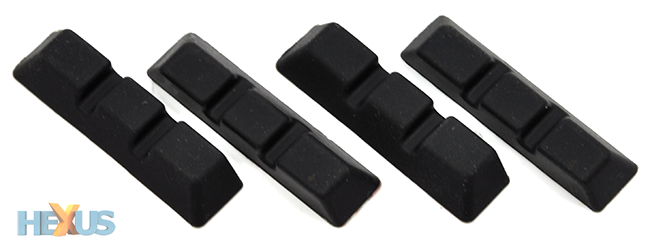
With the Air 240, a set of four stick-on rubber feet are included to prop-up the case when it's laying on its side. The chassis actually has no feet as standard, so you'd want to attach the stick-ons irrespective of which way up the PC will sit. Handy to have the option, though we do wonder if magnetic feet would have been a better solution. What is clever though is the case badge - it's magnetic and can be popped out and rotated to suit your preferred orientation. Those are the kind of finishing touches that make a difference.
Elsewhere, we can see a removable magnetic filter lining the PSU vent, and four expansion slots that allow for multi-GPU builds. But let's not get carried away: some compromises must have been made to enable the smaller form factor, so let's open up the Air 240 and take a look inside.

Read More : http://hexus.net/tech/reviews/chassis/73341-corsair-carbide-series-air-240/
If you want to contact RDT please feel free to call between the hours of 9am-8pm AEST. deon@robertsondt.com Ph: 0426279566 or visit https://www.facebook.com/rdtaus

Thursday, 10 July 2014

Samsung 850 Pro SSD

Buying an SSD can massively increase the speed of your PC, improving boot times, program loading speed and slashing power consumption. But what makes one solid-state drive different to another? All the changes you can’t see. Samsung’s new 850 Pro makes some significant behind-the-scenes upgrades to become the SSD you should buy today.

What Is It?

The Samsung 850 Pro is the latest and greatest SSD to hit the market from one of the oldest and most established memory manufacturers around. Samsung might be better known to most consumers as the brand behind some of the best smartphones and TVs around, but it’s had a much longer history in making NAND flash — the fingernail-sized chips that contain billions of transistors and gates and store your precious data.
The 850 Pro is interesting mainly because the design of those transistors and gates is a significant departure from the way flash memory has been produced for decades. Without getting too technical, Samsung has entirely changed the layout of the memory modules inside its flash storage to make them more efficient and faster to operate. This is the first drive on the market to use V-NAND flash (also known as 3D NAND), and Samsung is the only memory maker that can do it.

What Is It Good At?

The 850 Pro’s V-NAND flash, developed and designed and produced in-house by Samsung, isn’t like the flash memory in other solid-state drives. It’s vertically and horizontally stacked, which is a more efficient structure for fast switching; by using a more effective memory design overall Samsung is able to significantly increase the three core aspects of what makes a good SSD: performance, reliability, and power consumption.
If you’re running any garden-variety desktop PC, adding the 850 Pro in won’t even measure on a mains power meter; the 2.5W max power consumption of the 1TB drive barely registered against the several hundred other watts of my test system’s other components. What you will notice is the drop in power consumption when you use the 850 Pro to replace a traditional spinning-disk drive. Both these scenarios are hugely more important for anyone thinking of using the 850 Pro in a laptop, where you will see battery life improvements.
Oh, and the 850 Pro is fast. Proper fast. In CrystalDiskMark, where the mid-range Crucial M550 managed 542/491MBps, the 850 Pro wiped the floor with it with numbers that are near-perfect for the SATA3 standard. You really won’t find a faster SSD around unless you’re willing to pay obscene amounts of money for a PCI-Express version. Until SATA Express becomes widespread, the 850 Pro seems to be the point at which outright sequential disk performance will start to plateau.

Samsung 850 Pro (1TB): Performance

Storage: CrystalDiskMark (Sequential Read): 552MBps CrystalDiskMark (Sequential Write): 523Mbps

What Is It Not Good At?

The 128GB version of the 850 Pro, due to its smaller amount of onboard RAM, fewer NAND packages and less over-provisioning, is the slowest of the lot in testing, only cracking 470MBps write speeds instead of the 520MBps of the 256GB and above drives. This is a slight disappointment for consistency’s sake, but it also means the 256GB is the natural leader in price/performance. If you’re constrained by your budget, it’s not like the 128GB is slow by any means, but with the 850 Pro 256GB seems to be the sweet spot (as with other mid- to high-end SSDs).
At a technical level, The 850 Pro has a big limitation that it can’t get around: the bottleneck that is the SATA3 bus. SATA3 can only handle a theoretical maximum data rate of 750MBps, and the overhead of the SATA standard reduces that to 600MBps. At its maximum real-world throughput SATA3 is only really capable of 550MBps, which is why you see all these current high-end SSDs capped at 550MBps read speeds (and near that for writes). The Samsung 850 Pro easily reaches that barrier even with the cheapest, slowest-writing 128GB model — but it’s capable of more.
Being a brand new, high-end solid state drive the Samsung 850 Pro is expensive. Official pricing hasn’t been released for Australia just yet, but at US$700 for the 1TB model, US$400 for 512GB, US$200 for 256GB and US$130 for 128GB you’re paying a significant premium versus other big SSD brands and models for the innovation of the 850 Pro’s V-NAND flash.

Should You Buy It?

The Samsung 850 Pro is, by all metrics, one of the fastest and most powerful SSDs on the market. There’s a lot of work going on behind the scenes with the 850 Pro that you can’t see in benchmarks and simple upfront testing, too — it looks to have ironed out most of the kinks, like long-term reliability and continued write endurance. With that in mind, I think the 850 Pro well deserves its crown as the best consumer SSD currently on the market.
The lack of mSATA variant is a little mystifying, though, since the 850 Pro would fit well in with a high-end Ultrabook in the power savings it offers. If you have a larger laptop, or a desktop PC, looking for a hard drive speed upgrade, there’s no reason not to choose the 850 Pro apart from its price tag (which we’ll soon know for sure in Australia, so stay tuned).
SOURCE: http://www.gizmodo.com.au/2014/07/samsung-850-pro-ssd-australian-review/
If you want to contact RDT please feel free to call between the hours of 9am-8pm AEST. deon@robertsondt.com Ph: 0426279566

Wednesday, 2 July 2014

Gigabyte GTX 750 Ti Black Edition

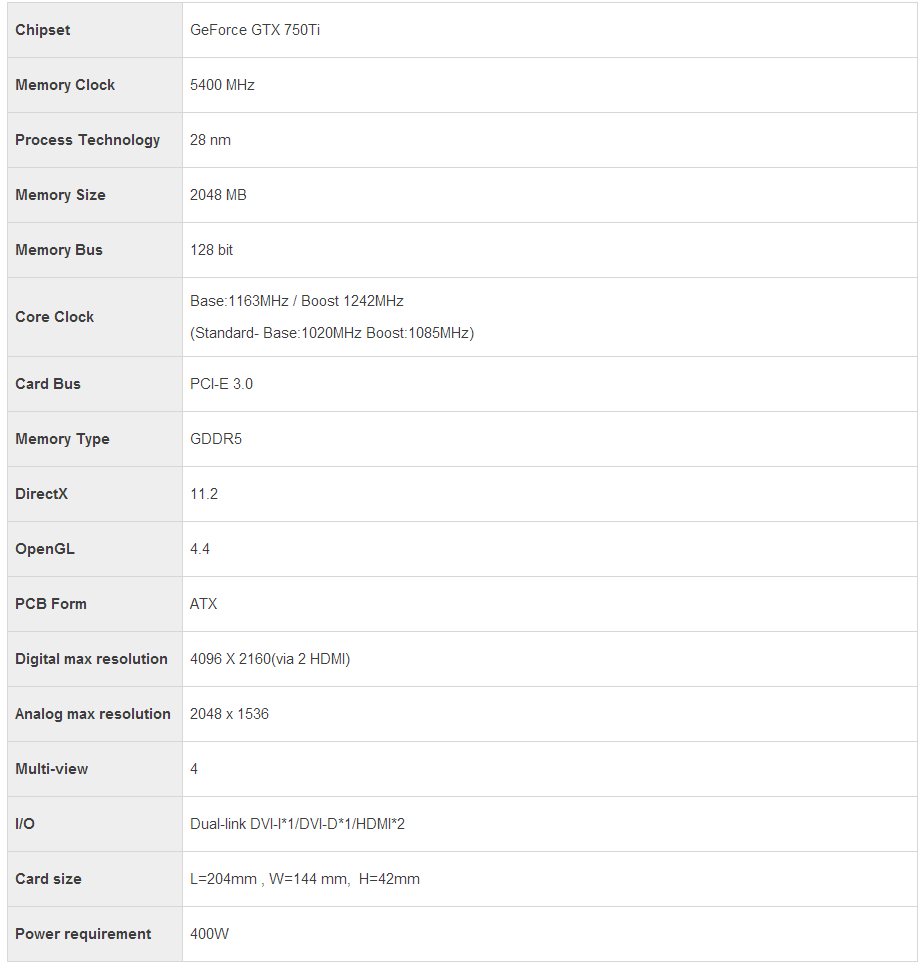
If you are looking for a budget friendly GPU that just works, this is it the Gigabyte GTX 750 Ti Black Edition.  The Black edition mean's it is badass and ready to pack a punch, on this card we have 2GB GDDR5, Memory clock 5400MHz, Base Clock 1163MHz and Boost of 1242MHz all this and only requiring 400W all thanks to the maxwell chip inside. Comparing this to the standard GTX 750 Ti we see a difference in performance worth paying for, Base Clock 1033MHz and Boost of 1111MHz. 

You are able to run up to 4k on this little card using the two HDMI ports, Gigabyte has put its after market cooler the Windforce with two ultra quiet fans. This little card is something that everyone on a budget should have. 

The Australian pricing is currently at $209, which if you ask me is pretty good value for your money. 


If you want to contact RDT please feel free to call between the hours of 9am-8pm AEST. deon@robertsondt.com Ph: 0426279566

Sunday, 22 June 2014

Life With Samsung U28D590D!


After living with the Samsung 4K Monitor U28D590D for over a week now I am surprisingly falling in love with it. Despite a few minor set backs I am happy with the purchase.

The TN Panel my not be the best for colour representation and viewing angles but for me it is not as big a problem. My eye sight is already pretty bad and moving from a 1080p monitor to 4K it is like a god send. No more straining my eyes.

One of the major downside would also have to be the stand as ASUS and AOC have bought 28" 4K monitors to the marked with some pretty amazing stand that allow for VESA and complete control.

One thing I would have liked would be for the Monitor to at least be 30 inches, Its not that big of a problem but I feel the extra 2 inches would make the experience a lot more immersing. The brightness on this panel is out standing Images are sharp bright and just look a whole lot better.

When working in Windows 8.1 I find that a lot of the programs are yet to be optimized  for 4K, the main one being Chrome. which just drives me crazy but lucky enough I run a Hackintosh so I get the best of both worlds.

In OS X Mavericks 10.9.3 4K optimisation has been drastically improved, they scaling options are far better than Windows 8.1 for now. Basically if I need to web browse or edit anything I will switch across to OS X, If I want to game in 4K obviously I will use Windows 8.1.

On the topic of gaming you will definitely want a pretty beasty system I am currently running 2 x EVGA GeForce GTX 780 in SLI and getting more than playable performance out of them. Gaming in Ultra is just beautiful especially when you play Bioshock Infinite you will just be blow away buy the detail.

All in all this is a great purchase for the value and with 4K become the norm be sure to stay tuned and get more info on whats around the corner.

Have a look at the video below for some more information:


If you want to contact RDT please feel free to call between the hours of 9am-8pm AEST. deon@robertsondt.com Ph: 0426279566

Wednesday, 11 June 2014

RDT's YouTube Channel


RDT has finally created a YouTube channel and will get around to adding more content soon.


If you are wanting to contact RDT please feel free to call between the hours of 9am-8pm AEST. deon@robertsondt.com Ph: 0426279566

Monday, 24 February 2014

The New Samsung Galaxy S5

Over at MWC 2014 there is an onslaught of new devices coming out on the market, this device the Samsung Galaxy S5 is one that I have been keeping my eye on. From what you can see it still keeps the same design as the S4 on the front of the device but as you turn the phone around you will notice a poly-carbonate leather like texture on the back similar to the Galaxy Note 3 which is something you either like or not.

The new things apart from all the gimmicky stuff revolves around whats on the inside of the device. Obviously we have an upgraded CPU to the Snapdragon  800 @ 2.5GHz, Adreno 330 GPU, 2GB Ram, a 2,800mAH Battery and all the fastest WiFi and Bluetooth connectivity you will expect.

One of the great new thing on this S5 is that is is dust resistant and water resistant IP67. This is something that in my opinion be on every device, but dont get too excited it is not as good as the Sony Xperia Z series, but close enough.

Samsung is boosting its S-Health applications as it seems to be all the range now a days. There is a heart rate sensor on the back, which offers a real life fitness coverage. Another sweet little upgrade is the Camera this is personally my favorite thing on the Galaxy series phones. The camera is a 16 Mega pixel shooter and will capture anything you want.

With all this fitness and S-Health stuff Samsung created a device to monitor you more the Samsung Gear Fit, which at first glance seems like the new Galaxy Gear 2/Neo smartwatches. More will be typed up on them soon.

All we need to know now is when I can get my grubby hands on to the device in Australia, as stated at MWC 2014 the device will be released on April 11th in 150 countries. Which I am hoping that Australia is one of them.