Thursday, 28 August 2014

Intel Core i7-5960X “Haswell-E” HEDT Flagship Processor Benchmarked and Overclocked To 4.0 GHz

The first benchmarks of Intel’s next generation Core i7-5960X “Haswell-E” processor have been unveiled by Coolaler forums. While several tech sites including us have the X99 and Haswell-E review planned for 29th August, Coolaler went ahead to showcase a performance preview of the upcoming Core i7-5960X processor which is the flagship SKU of the Haswell-E lineup.
Intel Haswell-E Core i7-5960X

Intel Core i7-5960X “Haswell-E” HEDT Flagship Processor Benchmarked

We have most of the details regarding the Haswell-E processors thanks to the leak from Videocardz earlier this week. The Intel Haswell-E processor lineup would include three SKUs, the Core i7-5960X, Core i7-5930K and Core i7-5820K. All processors are built on the 22nm Haswell architecture which means that they will improve the IPC performance while keeping the same power limits as previous generation processors due to enhanced power efficiency of the Haswell microarchitecture. Before moving into the feature set of the platform itself, we will detail the SKUs that will be launching in 29th August 2014:

Intel Core i7-5960X Processor


The Intel Core i7-5960X Extreme Edition would be the flagship processor of the lineup boasting 8 Cores and 16 threads. The Haswell-E Core i7-5960X will house 2.6 Billion transistors inside its 22nm die and measures at 335.2 mm which is considered a huge die. The die block diagram also shows that the Core i7-5960X is not a 12 core die as previously expected which turns out to be a Xeon core. We can see 8 Cores with a large amount of shared L3 cache in the middle with a DDR4 memory controller at the bottom and Queue, Uncore and I/O at the top side. This would be Intel’s first 8 Core consumer processor and would be clocked at 3.0 GHz base and 3.5 GHz boost frequency. The processor would feature 20 MB of L3 cache, 140W TDP and support for DDR4-2133 MHz memory. Being the flagship processor of the Haswell-E lineup, the Core i7-5960X would end up with a price of $999 US.
In terms of raw performance, the Core i7-5960X is around 20% faster in terms of 4K Video Editing, 32% faster in 3D rendering and 14% faster in games and AI processing compared to the last generation Core i7-4960X CPU that is the flagship Ivy Bridge-E offering. The models will be available with Intel’s TS13X liquid cooler which has been in the market since the first generation of Sandy Bridge-E processors and is priced in between $85-$100 and compatible with LGA 2011-3, LGA 2011, LGA 1366 and LGA 115* platforms.

Thayn3 over at coolaler forums configured a test setup for the Haswell-E platform which includes a Gigabyte X99 Gaming G1 WiFi motherboard, 16 GB of G.Skill Ripjaws IV memory operating at 3000 MHz CL15, two GTX Titan Black graphics cards, two Sandisk Extreme Pro 256 GB SSDs in Raid 0 and a Corsair H110 AIO closed loop liquid cooler. In stock performance numbers, the Core i7-5960X scored 18978 MB/s / 16573 MB/s / 16475 MB/s and 150.0 ns in Memory Copy/Read/Write/Latency benchmarks through MaxxMem 2. In Cinebench, the chip scored 1270 CPU marks in multi-threaded performance compared to 1096 on the Core i7-3930K and 822 on the Core i7-4770K.

The used also overclocked the chip to 4.0 GHz at just 1.200V (fixed voltage) which resulted in a Cinebench score increase to 1508 from 1270 and in HyperPI, the chip was able to finish 1M calculations in just 14.555 seconds. Surprisingly, the temperatures during both stock and overclocked runs was pretty decent for the chip, running at a maximum temperature of 55C at 4.0 GHz and 45C at the stock clock speeds. Following is a run down of the scores:

CineBench R15 (CPU Multithreaded Performance):

  • Intel Core i7-5960X @ 4.0 GHz: 1508
  • Intel Core i7-5960X @ 3.0 GHz: 1270
  • Intel Core i7-3930K @ 3.3 GHz: 1096
  • Intel Core i7-4770K @ 4.4 GHz: 822

Hyper PI and MaxxMem Performance:

  • Intel Core i7-5960X @ 4.0 GHz Maxmemm: 18978 MB/s / 16573 MB/s / 16475 MB/s and 150.0 ns
  • Intel Core i7-5960X @ 4.0 GHz HyperPi: 14.555 Seconds

We also have a surprise for you, a few days ago, we found a validation of the Core i7-5960X which was running at 6.2 GHz on LN2 overclock with the X99S SLI Plus motherboard. You can find it below:
Intel Core i7-5960X 6.25 GHz Overclock

Intel Core i7-5960X Benchmarks (Courtesy of Coolaler):
Intel Core i7-5960X Cinebench R15 BenchmarkIntel Core i7-5960X HyperPi BenchmarkIntel Core i7-5960X MaxxMem Performance


If you want to contact RDT please feel free to call between the hours of 9am-8pm AEST. deon@robertsondt.com Ph: 0426279566 or visit https://www.facebook.com/rdtaus

ASUS X99-E WS Workstation Motherboard Unveiled – Features Silver and Black Color Scheme Plus a Server Grade 8-Phase DiGi+ VRM

ASUS’s high-performance and workstation grade, X99-E WS motherboard has been unveiled prior to its launch tomorrow. The ASUS X99-E WS is a workstation motherboard featuring high quality components which ensure stability plus a neat black and silver color scheme which looks amazing on the new motherboard. In addition to the ASUS X99-WS, the ROG Rampage V Extreme and ASUS X99 Deluxe motherboards have also been leaked.
ASUS X99-E WS Motherboard
Images are courtesy of Brightsideofnews!

ASUS X99-E WS Workstation Motherboard Unveiled

The good thing about the new X99 chipset based motherboards is that they are fully compatible with the Xeon E5 lineup of processors. The LGA 2011-3 socket allows support for both Haswell-E and Haswell-EP processor in the new platform family plus featuring DDR4 memory support. There have been several leaks surrounding the Xeon E5-2600 V3 series family and I have a post coming out on the benchmark numbers of the Xeon E5-2669 V 3 processor but before that, let’s take a look a the workstation geared X99-E WS from ASUS.
Featuring the LGA 2011-3 socket, the X99-E WS supports both the Haswell-E and Haswell-EP family of CPUs. The board features an 8-Phase DIGI+ II VRM and the socket is powered through dual 8-Pin connectors including the 24-Pin ATX connector. The DiGi+ design on the motherboard includes several high-quality components such as the DR.MOS MOSFETs, capacitors with the ability to operate up to 12000 hours, ProCool power connectors and thermal chokes. The socket is surrounded by eight DDR4 DIMM slots (four on each side) which can support up to 128 GB of DDR4 memory with speeds of up to 3300 MHz (O.C). The motherboard has five sets of heatsink which include two for the VRM section and three for the PCH, DIMM Electrical and a heatsink below the socket. Each of the five heatsinks are interconnected via a dense heatpipe and the board makes use of three of them emphasizing on its stability oriented design.
Storage includes 12 SATA 6 Gbps ports and two SATA Express ports. There’s also two USB 3.0 headers and two USB 2.0 headers. ASUS has also include their Crystal sound 2 audio engine and EPU technology on the board. A single M.2 SSD connector can be spotted beneath the PCH heatsink. The PCH heatsink itself has a brush metal effect on it with a ASUS logo engraved in the center. Expansion slots include seven PCI-e 3.0 x16 slots which can support 4-Way SLI and Crossfire multi-GPU functionality. A single 6-Pin connector beneath the socket is used to supply additional power to the PCI-e slots when running multiple graphics cards. The Crystal sound 2 chip is isolated to its own PCB indicated by a yellow line. A few Power On/Off, Reset switches can be found at the bottom of the board.
The I/O panel includes 10 USB 3.0 ports, Dual Gigabit Ethernet LAN ports, a 7.1 channel HD audio jack, an E-SATA and Firewire port along with a reset switch and ASUS Connect panel. The MSRP of the board is $519 US which is high but considering this is a workstation board, it is expected.
ASIS X99-E WS Motherboard


If you want to contact RDT please feel free to call between the hours of 9am-8pm AEST. deon@robertsondt.com Ph: 0426279566 or visit https://www.facebook.com/rdtaus

Wednesday, 27 August 2014

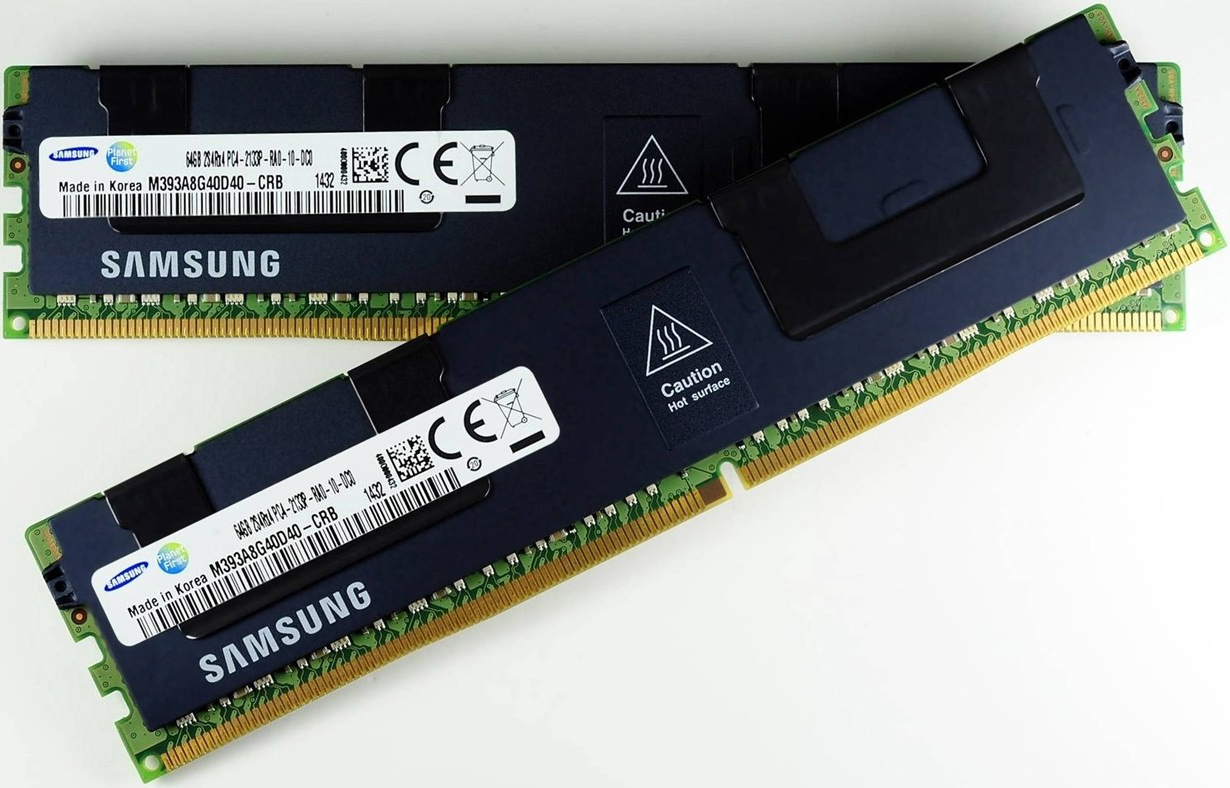
Samsung begins to produce 64GB DDR4 modules based on TSV chips

Samsung Electronics on Tuesday said that has started to produce 64GB DDR4 memory modules that are powered by DDR4 memory chips that feature three dimensional (3D) “through silicon via” (TSV) package technology. The DRAM [dynamic random access memory] modules are designed for enterprise servers.
Samsung’s 64GB registered dual inline memory modules (RDIMMs) feature 36 DDR4 memory chips, each of which consists of four 4Gb DDR4 DRAM devices made using 20nm-class process technology. The DDR4 dies are pierced to contain hundreds of holes and then are vertically connected through electrodes that are passed through the holes. Samsung’s 64GB memory modules operate at 2133MHz.
samsung 64gb tsv ddr4 dram module scheme Samsung begins to produce 64GB DDR4 modules based on TSV chips
Samsung claims that the new 64GB TSV DDR4 modules perform twice as fast as a 64GB module that uses wire bonding packaging, while consuming about 50 per cent the power.
Since DDR4 memory controllers support limited amount of RDIMMs per channel, memory makers need to create high-density memory modules in order to enable servers with extreme amounts of memory. In order to quickly grow densities of memory chips and modules, makers of DRAM chips will have to use the TSV technology going forward. In the future, Samsung believes that it will be able to stack more than four DDR4 dies using its 3D TSV technology, to create even higher density DRAM chips and modules.
“Samsung is reinforcing its competitive edge in the DRAM market with its new state-of-the-art solution using its 3D TSV technology, while driving growth in the global DRAM market,” said Jeeho Baek, vice president, memory marketing, Samsung Electronics. “By introducing highly energy-efficient DDR4 modules assembled with 3D TSV, we’re taking a big step ahead of the mainstream DDR4 market, which should dramatically expand with the expected introduction of next-generation CPUs in the second half of this year.”
samsung 64gb tsv ddr4 dram module 1024x656 Samsung begins to produce 64GB DDR4 modules based on TSV chips
The new 64GB DDR4 memory chips from Samsung will be available inside servers based on the new-generation Intel Xeon E5 “Haswell-EP” processors that support DDR4 memory in the coming months.
Earlier this year SK Hynix demonstrated a 128GB DDR4 memory module based on 4-layer 8Gb DRAMs connected using TSV. Such modules are expected to emerge in 2015.

Source: http://www.kitguru.net/components/memory/anton-shilov/samsung-begins-to-produce-64gb-ddr4-memory-modules-based-on-tsv-chips/
If you want to contact RDT please feel free to call between the hours of 9am-8pm AEST. deon@robertsondt.com Ph: 0426279566 or visit https://www.facebook.com/rdtaus

Corsair HXi Series PSU's on the Way!

Corsair recently revealed there refined HXi series power supplies which are now on there way, to start with the HXi Series power supplies give you extremely tight voltage control, virtually silent operation, and a fully modular cable set. 
With all Japanese 105 degree C capacitors, they’re a great choice for high performance PCs where reliability is essential. The HX1000i features Corsair Link integration for monitoring performance and adjustment of fan speed and multi-rail/single rail mode, 80 PLUS Platinum efficiency, delivering 92 percent energy efficiency at real world load conditions, ZeroRPM mode for fanless operation at low loads and outstanding noise reduction and 140mm thermally controlled fluid dynamic bearing fan spins up as needed. Backed by a 7 year Corsair warranty. 

If your not in to the 1000w PSU's then you have the option to get,  750w and 850w. All in which are Platinum power supplies and preform amazingly. 


If you want to contact RDT please feel free to call between the hours of 9am-8pm AEST. deon@robertsondt.com Ph: 0426279566 or visit https://www.facebook.com/rdtaus